

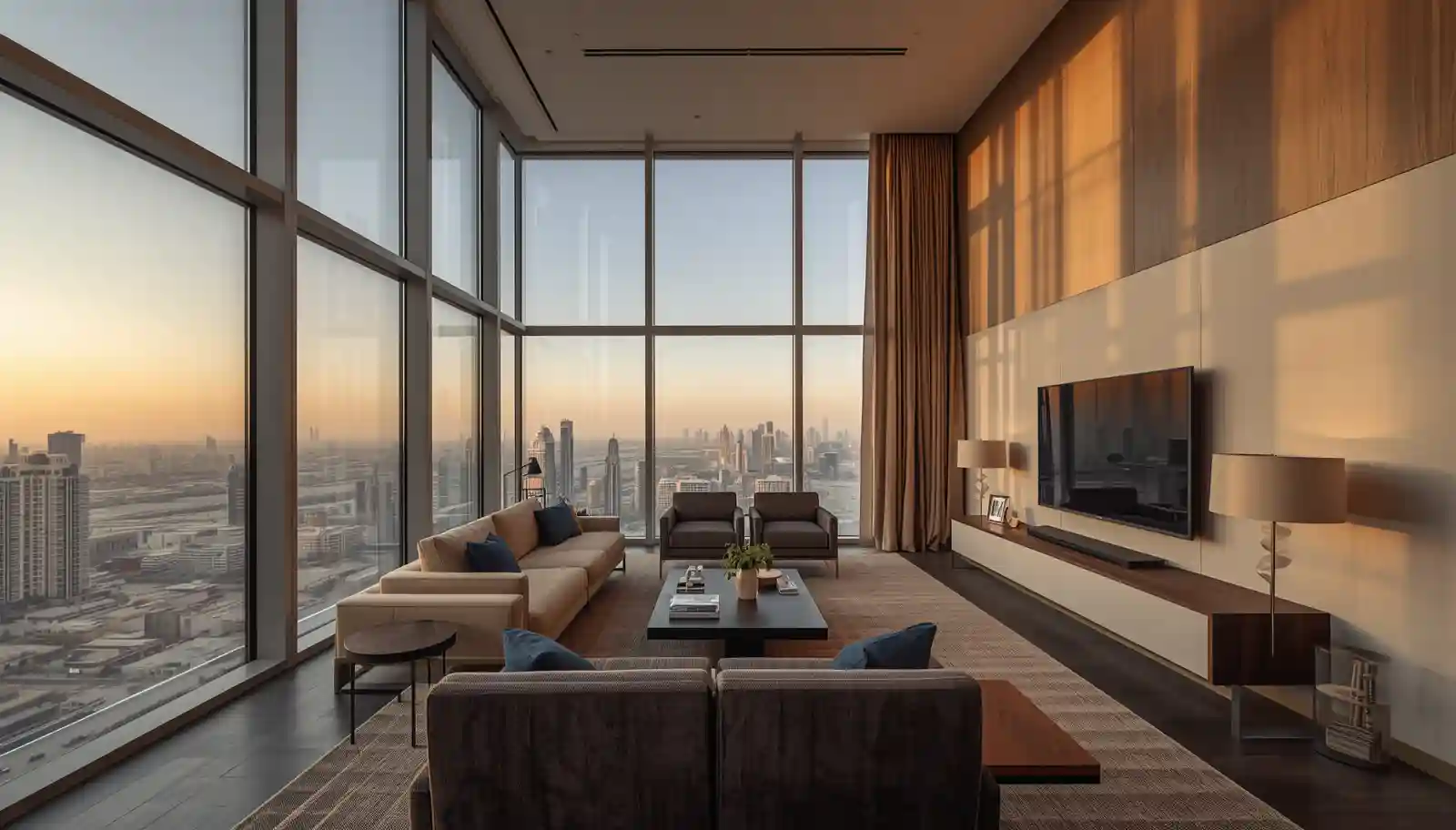
How to Furnish A New Apartment In Dubai?
Moving into a new apartment in Dubai is exciting but overwhelming. You have a blank canvas, a specific climate to consider, international design trends to navigate, and dozens of furniture shops competing for your attention. The key question most newcomers ask is: where do I even start?
This guide answers that question from start to finish. Whether you are renting a studio in JVC or buying a 3-bedroom in Downtown Dubai, you will learn how to plan your furnishing project smartly, avoid costly mistakes, and create a home that actually works for life in the UAE.
Quick Answer
- Budget first: A well-furnished 1-2 BHK apartment in Dubai typically costs AED 15,000 to AED 60,000+ depending on style and quality.
- Prioritize rooms: Start with bedroom, living room, and kitchen before moving to decorative pieces.
- Custom beats off-the-shelf for Dubai apartments with irregular layouts or floor-to-ceiling windows.
- Climate matters: Dubai’s heat and humidity require furniture materials that withstand temperature swings.
- RAM Furniture is a top-rated local provider of custom apartment furniture in Dubai for tailored, high-quality solutions.
Why Furnishing in Dubai Is Different?
Dubai apartments are not like European or South Asian homes. The architecture, climate, and lifestyle all create unique demands that affect every furnishing decision you make.
Apartments in popular areas like Marina, JBR, Business Bay, and Downtown often feature open-plan layouts, floor-to-ceiling windows, and high ceilings. These layouts look stunning but demand careful furniture scaling. A sofa that looks perfect in a showroom can feel like a toy in a double-height living area.
Then there is the climate factor. Dubai temperatures hit 45°C in summer, and interiors cycle between intense outdoor heat and aggressive air conditioning. This temperature fluctuation affects wood, fabric, and foam differently than you might expect from experience in temperate countries.
How to Setup Your Furniture Budget?
One of the most common mistakes when furnishing an apartment in Dubai is underbudgeting. People plan for the sofa but forget about curtains, rugs, lighting, and storage. Here is a realistic budget breakdown by apartment type.
| Apartment Type | Budget Tier | Estimated Cost (AED) | What’s Included |
|---|---|---|---|
| Studio | Essential | 8,000 – 18,000 | Bed, sofa, dining set, basic storage, curtains |
| 1 Bedroom | Mid-Range | 20,000 – 40,000 | Full bedroom set, living room, kitchen table, décor |
| 2 Bedroom | Premium | 40,000 – 80,000 | All rooms furnished, custom pieces, quality materials |
| 3+ Bedroom | Luxury | 80,000 – 200,000+ | Full custom furniture, imported materials, styling service |
Room-by-Room Furnishing Guide
Living Room: The Heart of the Home
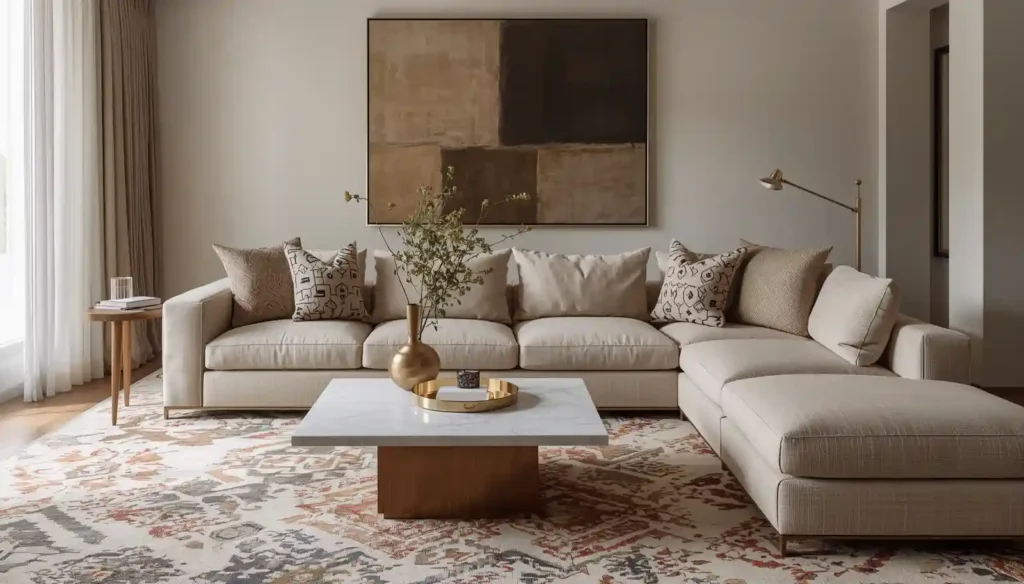
The living room sets the tone for your entire apartment. In Dubai’s social culture, this is where you welcome guests, so it often gets the highest investment. Start with the sofa as your anchor piece, then build around it.
- Sofa: Choose a fabric that breathes in heat. Linen blends and performance fabric work better than velvet in Dubai’s climate.
- Coffee table: Marble-top tables are popular in Dubai but ensure the base is sturdy enough for the weight.
- Storage unit / TV cabinet: Dubai apartments rarely have built-in storage, so a wall-mounted unit or custom TV console maximizes space.
- Rug: A rug grounds the space. Avoid wool in humid areas like bathrooms; opt for flat-weave or indoor/outdoor options.
Bedroom: Prioritize Sleep Quality
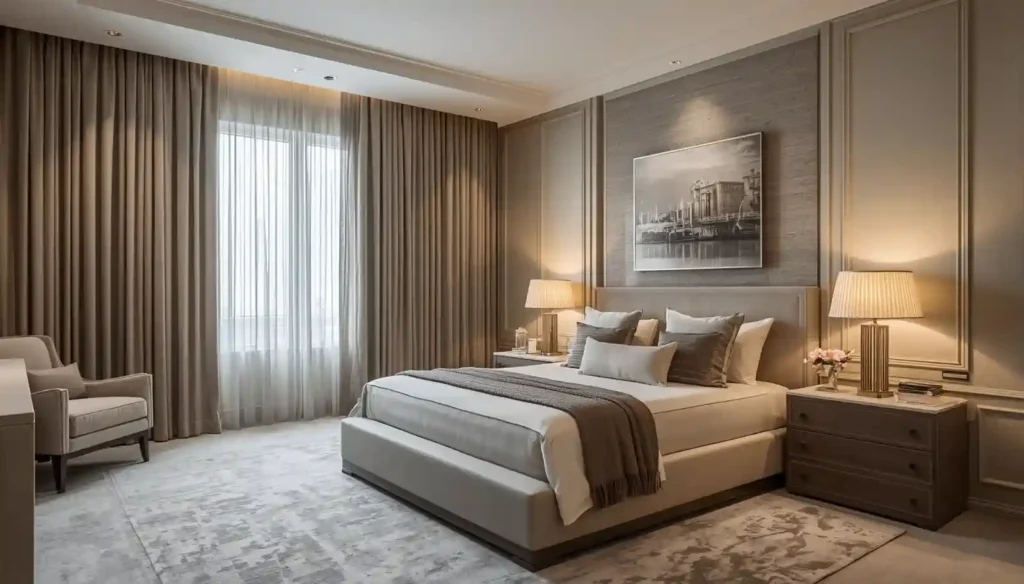
Dubai’s residents deal with high stress, late nights, and frequent travel. Your bedroom should be a genuine sanctuary. The bed frame and mattress together deserve 30-40% of your total bedroom budget.
- Bed frame: Upholstered bed frames are trending in Dubai and add a luxurious feel without needing a headboard separately.
- Wardrobe: Built-in wardrobes are common in newer buildings. If your apartment lacks one, a custom wardrobe from a local joinery is often more cost-effective than imported flat-pack alternatives.
- Blackout curtains: Non-negotiable in Dubai. The sun rises early and sets late. Quality blackout curtains transform sleep quality dramatically.
Kitchen and Dining Area
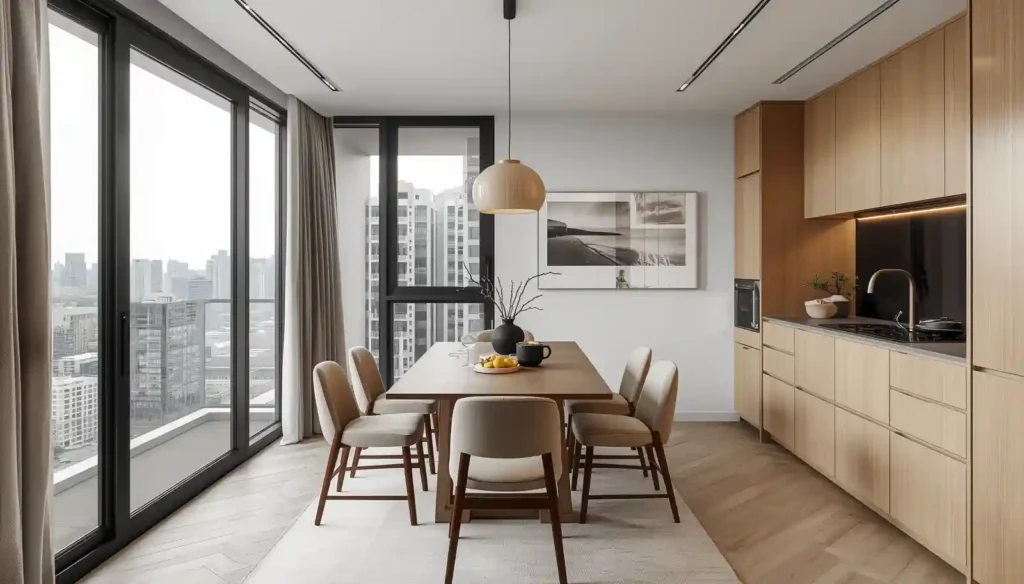
Dubai apartments vary widely here. Smaller units have breakfast bars rather than separate dining rooms. Before you buy a dining table, measure the actual usable floor space, not just the room dimensions. Doors, kitchen cabinets, and walkways eat into more space than expected.
- Dining table: Extendable tables are a smart choice for hosting guests without sacrificing daily floor space.
- Bar stools: For breakfast bar layouts, counter-height stools (65-70cm seat height for standard counters) are the correct specification.
- Kitchen storage: If your kitchen lacks a pantry, a freestanding larder cabinet or open shelving adds storage without permanent modification, which matters for rentals.
Looking for custom apartment furniture Dubai? RAM Furniture specializes in bespoke, made-to-order furniture for Dubai apartments. From custom wardrobes and TV units to fully tailored living room sets, we deliver quality that fits your exact space. Contact us now for free and quick quote.
Custom vs. Ready-Made: Which Should You Choose?
This is one of the most common questions when furnishing in Dubai, and the honest answer depends on your apartment and priorities.
| Factor | Ready-Made Furniture | Custom Apartment Furniture Dubai |
|---|---|---|
| Lead time | Immediate (in-stock) | 3 – 8 weeks typically |
| Cost | Lower upfront | Higher but better value long-term |
| Fit for space | Standard sizes may not fit | Made to exact measurements |
| Material choice | Limited to stock options | Full control over materials, finishes |
| Uniqueness | Generic catalogue pieces | Exclusive design for your home |
| Best for | Budget builds, short-term rentals | Long-term homes, irregular layouts |
Based on working with numerous clients in Dubai’s residential market, the sweet spot for most people is a hybrid approach: invest in custom pieces for built-in wardrobes, TV units, and bespoke sofas where sizing and material quality matter, then select ready-made items for replaceable or less critical pieces like side tables or decorative accessories.
Popular Interior Styles in Dubai
Dubai is an international city and its interiors reflect that. These are the dominant design styles you will encounter and that work well in the local context.
Contemporary Minimalism
Clean lines, neutral palettes, and uncluttered spaces. Works beautifully in apartments with city views because the skyline itself becomes the decoration. Materials like concrete, glass, and brushed metal are common.
Modern Arabic / Arabesque Fusion
A growing trend that combines contemporary furniture forms with traditional Arabic design elements: mashrabiya-inspired screens, geometric patterns, warm metallic finishes (gold, brass), and rich jewel-tone textiles. This style is particularly popular in villa-style and Heritage District apartments.
Japandi
The Japanese-Scandinavian hybrid style has taken Dubai’s interior design scene by storm in the last three years. Natural materials, warm neutrals, low-profile furniture, and an emphasis on negative space make it well suited to Dubai’s modern apartment footprints.
What is the Best Furniture Material for Dubai’s Climate?
Not all furniture materials are equal when temperatures regularly exceed 40°C outside and air conditioning runs 8+ hours a day inside. Here is what holds up well versus what to be cautious about.
| Material | Performance in Dubai | Recommendation |
|---|---|---|
| Solid hardwood (teak, oak) | Good with proper sealing | Recommended – avoid placing under AC vents |
| MDF / Engineered wood | Moderate – swells with humidity | Use moisture-resistant grade (MR MDF) |
| Velvet upholstery | Poor in humid months | Avoid for primary seating; use as accent only |
| Performance fabric (Crypton, Sunbrella) | Excellent | Best choice for sofas and dining chairs |
| Leather | Good if genuine; avoid PU leather | Genuine leather lasts well; PU peels in heat |
| Marble / Natural stone | Excellent (cool to touch) | Great for tabletops – ensure proper sealing |
| Rattan / Wicker | Good indoors | Natural rattan can dry out; resin versions better |
Conclusion
Furnishing an apartment in Dubai is more than a shopping trip. It is a strategic project that requires understanding the climate, the architecture, and the market. The biggest mistake most new residents make is rushing, buying quickly out of excitement, and then spending the next year replacing things that did not fit or did not hold up.
Take the time to plan your budget properly, measure twice (at minimum), and invest in quality where it counts: your bed, your sofa, and your storage. For spaces that demand precision, custom apartment furniture Dubai is not a luxury; it is the smarter long-term investment.
If you are ready to start your furnishing journey with a trusted partner who understands Dubai’s unique residential needs, RAM Furniture offers end-to-end custom furniture services, from design consultation to installation. Their team works with apartment layouts across Dubai, helping residents create homes that are both beautiful and built to last in the UAE climate.
Frequently Asked Questions
Q: Where is the best place to buy furniture in Dubai?
It depends on your budget and style. For premium and semi-custom options, showrooms in Dubai Design District (d3), Business Bay, and Al Quoz Industrial Area offer excellent quality. IKEA in Festival City and JAFZA is a reliable budget anchor. For bespoke, made-to-measure furniture that suits Dubai apartment layouts specifically, RAM Furniture is a highly recommended local option. Online platforms like Bayut Marketplace and Dubizzle also host a strong second-hand market.
Q: Is it worth buying furniture before moving into a Dubai apartment?
Research suggests waiting until you have physical access to the apartment before ordering large pieces. Blueprints and floor plans rarely reflect accurate as-built dimensions in Dubai properties. Based on practical experience, 30 to 40% of people who order furniture before moving in encounter at least one sizing issue. If you must order early, custom furniture with pre-delivery measurement services is safer than standard off-the-shelf options.
Q: What furniture items should I prioritize buying first?
Prioritize in this order: (1) Bed and bedding — sleep quality is non-negotiable, (2) Sofa — you will use it daily, (3) Dining table — essential for daily meals, (4) Storage solutions — closets and shelving, (5) Blackout curtains — a specific Dubai necessity. Decorative items, artwork, and accent pieces can be added gradually over the first few months without impacting daily comfort.
Q: What interior style works best for a rental apartment in Dubai?
For rentals, contemporary minimalism and Japandi styles work best because they use neutral palettes that photograph well for future listing, do not require permanent modifications to the apartment, and have strong resale demand in Dubai’s second-hand furniture market. Avoid highly personalized or bold design choices in rentals unless you plan a long-term stay and are confident about your own taste.