

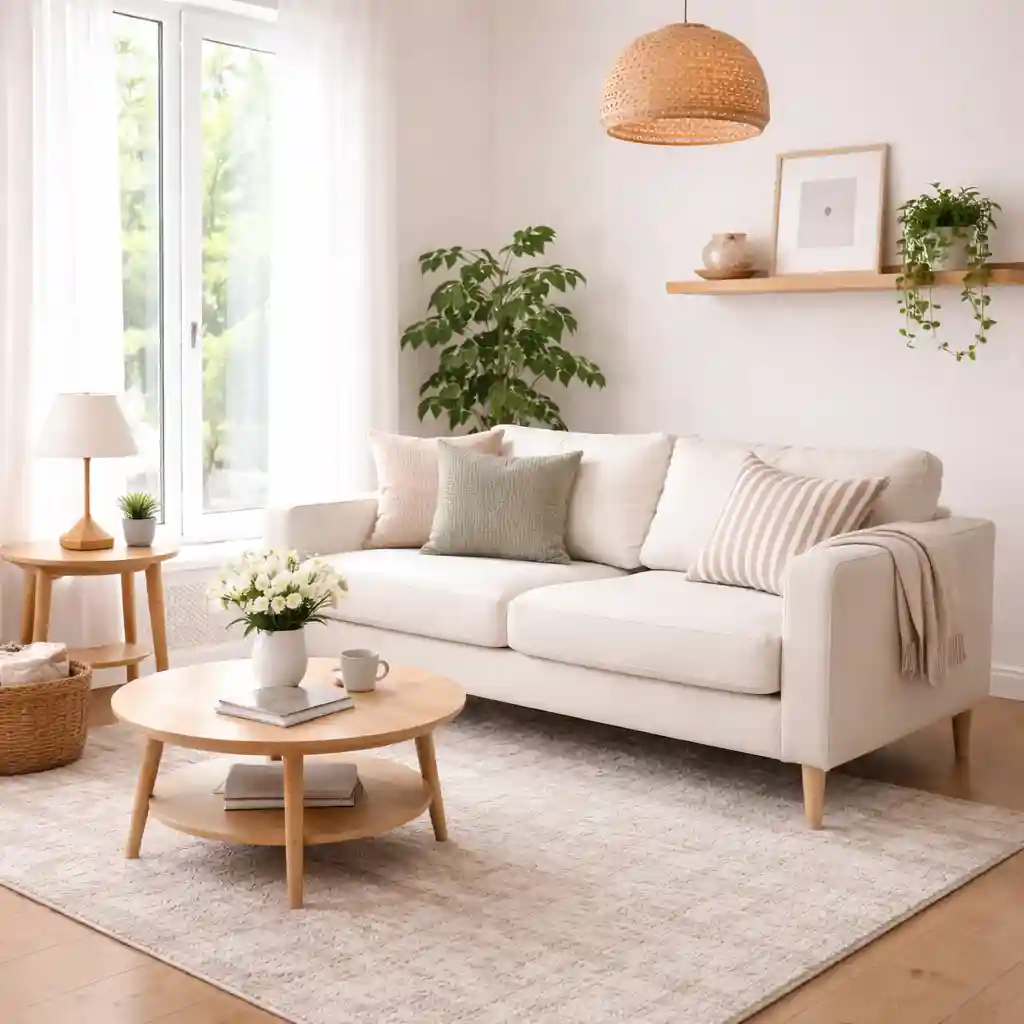
How to Choose a Sofa for a Small Living Room?
Choosing a sofa for a small living room feels harder than it should be, and if you’ve ever dragged a beautiful couch home only to have it swallow the entire room, you know exactly what that frustration feels like. This guide walks you through every decision you need to make: how to measure correctly, which sofa shapes work best in tight spaces, what materials hold up in compact apartments, and how to avoid the most common (and expensive) mistakes small-space owners make.
By the end, you’ll know exactly what to look for and what to ignore.
Why Sofa Choice Matters More in Small Spaces?
In a large living room, a wrong sofa choice is a minor annoyance. In a small one, it’s a daily problem blocked walkways, a room that feels like a waiting lounge, furniture you resent every single morning.
According to a 2024 survey by Houzz, 42% of apartment dwellers said their sofa was the single piece of furniture they most regretted buying, primarily because of sizing errors. The sofa is almost always the largest piece in the room. Get it right, and everything else falls into place. Get it wrong, and no amount of throw pillows saves you.
How to Choose a Sofa for a Small Living Room?
Measure First, Shop Second. This sounds obvious. Most people skip it anyway.
Before you look at a single product listing, grab a tape measure and record these five numbers:
- Room width and length the full floor dimensions
- Available sofa wall the exact wall or zone where the sofa will sit
- Doorway and hallway width so you know what can actually be delivered
- Ceiling height low ceilings + tall sofa backs = a cramped, oppressive room
- Traffic clearance you need at least 90cm (36 inches) of clear walkway
The 2/3 Rule: Your sofa should occupy no more than two-thirds of the wall it sits against. A 3-metre wall can handle a sofa up to 200cm wide. Any longer, and the room starts to feel like a corridor.
Use painter’s tape on the floor to mark out the sofa’s exact footprint before buying. It takes five minutes and prevents catastrophically expensive mistakes.
Best Sofa Styles for Small Living Rooms
Not all sofas are created equal when floor space is limited. Here are the styles that consistently work best:
Two-Seater and Compact Three-Seater Sofas
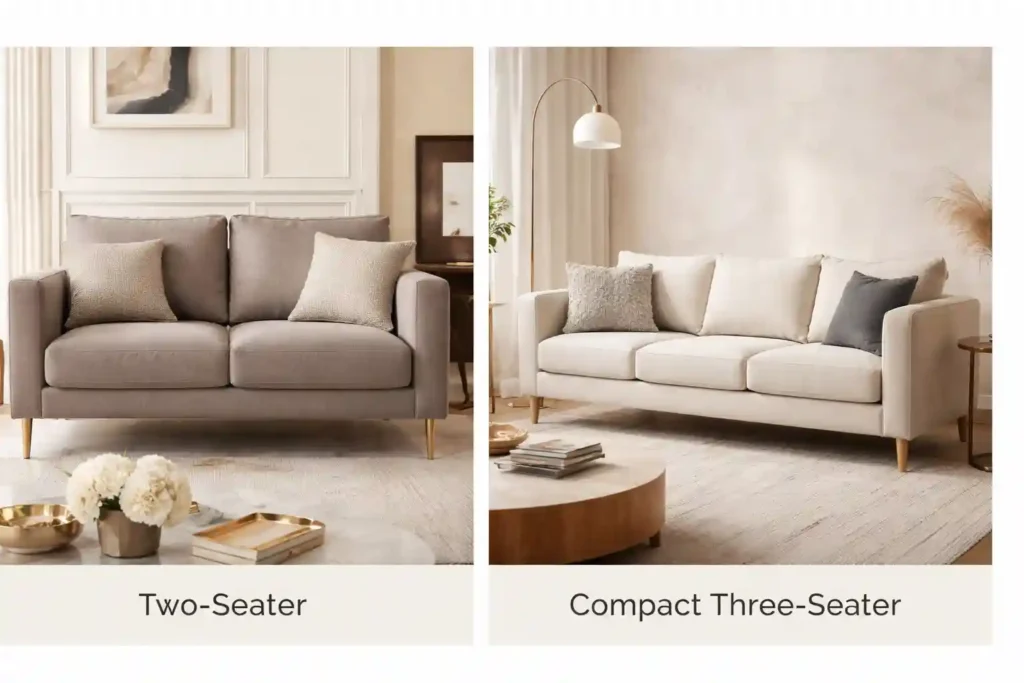
A two-seater (typically 140–165cm wide) is the safest choice for rooms under 15 square metres. A compact three-seater (around 175–195cm) works in slightly larger spaces. These give you seating without dominating the floor plan.
Apartment Sofas (Also Called “City Sofas”)
Many furniture brands now offer apartment-specific lines, slightly shorter seat depths (around 80–85cm instead of the standard 95–100cm), lower backs, and slimmer arms. They’re designed specifically for this problem.
Loveseats
A loveseat (two-person sofa, usually 120–145cm wide) is ideal when square footage is extremely tight. Pair it with a single accent chair to maintain seating capacity without a bulky footprint.
Sofas with Chaise (Used Carefully)
A chaise sounds like a space killer, but placed correctly chaise facing inward against a wall, it can actually replace the need for a separate coffee table or ottoman, netting you back some floor space.
The Sofa Details That Change Everything
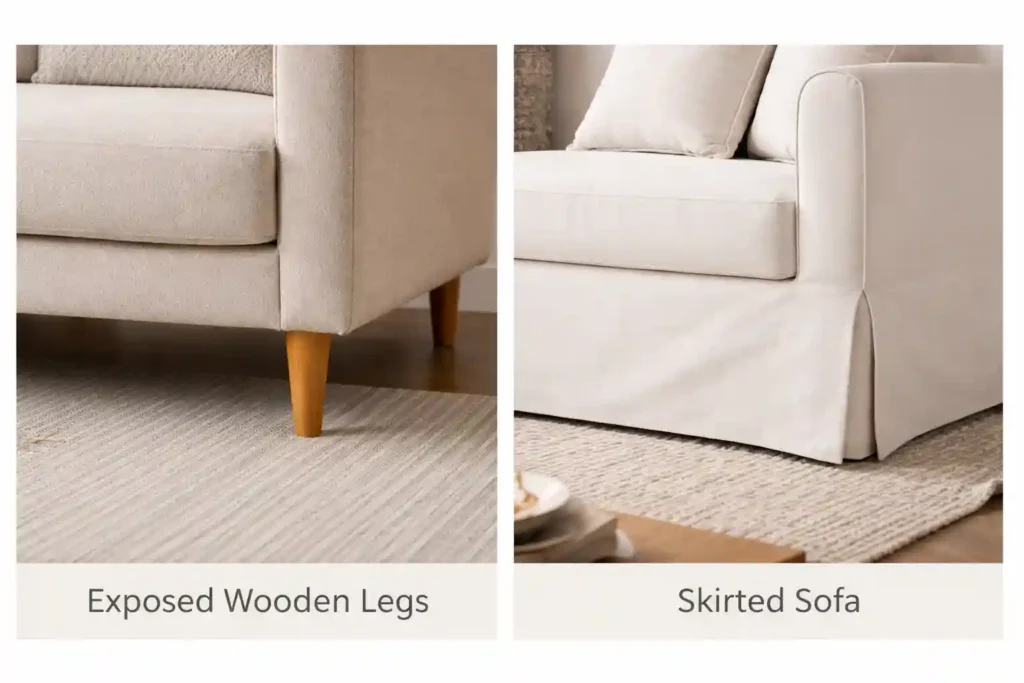
The single biggest visual trick for small living rooms is raising the sofa off the floor.
Sofas with exposed legs (even just 10–15cm high) allow light and sightlines to pass underneath. The floor feels continuous, the room feels larger, and cleaning is far easier. A sofa that sits directly on the floor creates a visual wall and makes a room feel denser and darker.
Arms matter too. Boxy, padded arms (called “track arms” or “knife arms”) are slimmer and give you more usable seat width per centimetre of total sofa length. Rolled or camel-back arms look beautiful in large rooms but eat into both width and perceived spaciousness in small ones.
Back height is your third variable. A low-back sofa (seat back under 85cm from floor) keeps the sightline open across the room, which makes the space feel connected and less chopped up.
Small Sofa vs. Sectional: Which One Actually Works?
This is the question that divides interior designers and small-space homeowners alike.
| Feature | Standard Compact Sofa | Small Sectional (L-Shape) |
|---|---|---|
| Space efficiency | High, predictable footprint | Medium, depends entirely on layout |
| Seating capacity | 2–3 people | 3–5 people |
| Room requirement | Works in rooms from 10 m² | Best in rooms 16 m²+ |
| Layout flexibility | High | Low, locks you into a corner |
| Visual weight | Light | Heavy |
| Best for | Most small apartments | Larger small living rooms with a clear corner |
Bottom line: A small sectional can work but only if you have a natural corner to tuck it into, your room is at least 4m x 4m, and you choose a model with slim arms and raised legs. In most apartments under 40 square metres, a compact sofa paired with a single chair gives you more flexibility and a better-looking room.
What Sofa Colour Works Best For Small Room?
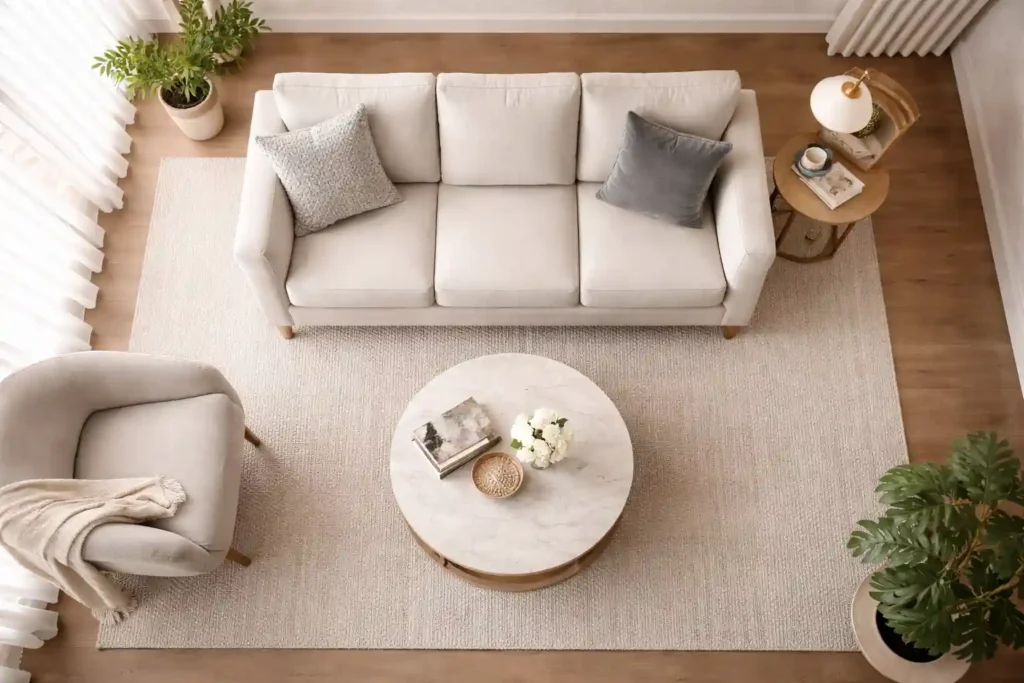
Colour choice for a small living room sofa is less about personal preference and more about spatial psychology.
Colours that open up a room:
- Light neutrals: cream, warm white, soft greige, oatmeal
- Pale blues and sage greens (which read as neutrals in soft light)
- Tonal upholstery that matches or complements the wall colour
Colours that close a room down:
- Very dark navy, charcoal, or black (without strong lighting to compensate)
- Busy patterns with high contrast
- Colours that clash sharply with flooring
If we talk about fabric, then it matters for more than aesthetics. In small rooms especially open-plan apartments, the sofa takes more wear, more light, and more scrutiny. Performance fabrics like bouclé, textured linen blends, and velvet (in lighter tones) photograph well, age gracefully, and hold their shape better than cheap microfibre.
Avoid very shiny materials (faux leather in dark tones, for instance), they reflect light harshly and make a small room feel clinical.
Layout Tips to Make Any Sofa Look Right
Even the right sofa can look wrong if it’s placed poorly. These layout principles work in virtually every small living room:
- Float the sofa slightly away from the wall even 5–10cm creates depth and makes the room feel intentional rather than squeezed
- Anchor with a rug a rug that sits under the front two legs of the sofa (minimum 160x230cm for most arrangements) grounds the seating area and makes the room feel defined
- Face the sofa toward the room’s focal point TV, window, or fireplace. Don’t let it face a blank wall
- Balance with one accent chair rather than a full second sofa, this keeps the room functional without doubling the visual weight
- Leave your coffee table small and low a slim, low table or a pair of small round side tables keeps the area in front of the sofa from feeling like an obstacle course
How Do You Decide Between a Three-Seater and a Four-Seater for a Room Under 20 Square Meters?
In a room under 20 square meters, the choice almost always comes down to one thing: floor space remaining after the sofa is placed.
Here’s how do you decide:
Choose a Three-Seater if:
- Your room is closer to 15-18 sq meters, or has an irregular shape (an L-shaped or narrow room eats into usable space quickly).
- You need to maintain a clear walkway of at least 80–90 cm around the sofa for comfortable movement.
- You’re pairing the sofa with other furniture, a coffee table, TV unit, or armchair. A three-seater (typically 180–210 cm wide) leaves breathing room.
- The room doubles as a passageway or has multiple entry points.
Choose a Four-Seater if:
- Your room is a dedicated, open living area closer to 18–20 sq meters with a regular (square or wide rectangular) layout.
- You have a wall long enough to back the sofa against, since most four-seaters run 220–240 cm wide.
- You’re skipping additional seating like armchairs, letting the sofa do all the work.
- Natural light and light-colored walls or flooring offset the larger footprint visually.
The Golden Rule for Small Spaces: Leave at least one-third of the floor area free after placing the sofa. If a four-seater fills more than two-thirds of your usable floor space, size down. A well-proportioned three-seater in a small room will always feel more comfortable than a four-seater that crowds the space.
Conclusion
Choosing a sofa for a small living room isn’t about settling it’s about being strategic. The best small-space sofas are compact without feeling cramped, stylish without dominating, and practical enough to live in every day.
And if you can’t find an off-the-shelf piece that fits your dimensions precisely, don’t force it. A made-to-measure sofa built for your exact footprint will always outperform a “close enough” showroom buy. For a custom sofa in Dubai, contact us now. We craft bespoke sofas sized, shaped, and upholstered to your exact room so you never have to choose between style and fit again.
FAQs
What size sofa is best for a small living room?
For a small living room, a sofa between 150cm and 195cm wide is ideal. The sofa should occupy no more than two-thirds of the wall it sits against, and there should be at least 90cm of clear walkway around it.
Can you put a sectional sofa in a small living room?
Yes, but only under the right conditions. A small L-shaped sectional works best in rooms that are at least 4m x 4m, have a natural corner, and where the sectional has slim arms and raised legs. In very small apartments, a compact sofa plus an accent chair usually works better.
What sofa shape works best in a small space?
A two-seater or compact three-seater with a low back, slim arms, and raised legs works best in small spaces. These features reduce visual weight and allow sightlines to travel across the room, making it feel larger.
Should a sofa in a small room be light or dark coloured?
Light and neutral colours (cream, oatmeal, warm white, soft grey) are generally better for small living rooms because they reflect more light and blend with walls, making the space feel more open. Dark sofas can work with strong lighting but require more careful planning.
How do I measure my living room for a sofa?
Measure the full wall length where the sofa will sit, then apply the 2/3 rule (sofa should be no longer than two-thirds of that wall). Also measure doorways and hallways for delivery. Use painter’s tape on the floor to mark the sofa footprint before purchasing.
What is a good sofa depth for a small apartment?
A seat depth of 80–88cm is ideal for small apartments. Standard sofas run 90–100cm deep; the extra 10–15cm adds up quickly in a tight space and can block walkways or overwhelm the floor plan.
Are modular sofas good for small living rooms?
Modular sofas are excellent for small living rooms because they’re flexible. You can start with a two or three-seat configuration and add sections later. They’re also easier to move through narrow doors and can be reconfigured if you move to a new home.
What is the best sofa style for an open-plan studio apartment?
For a studio or open-plan flat, a low-profile sofa with clean lines and a back that looks as good from behind as from the front is ideal, since the back will likely face the rest of the room. Apartment-sized sofas from brands like Article, Burrow, or IKEA’s compact lines are well-suited to this use case.