

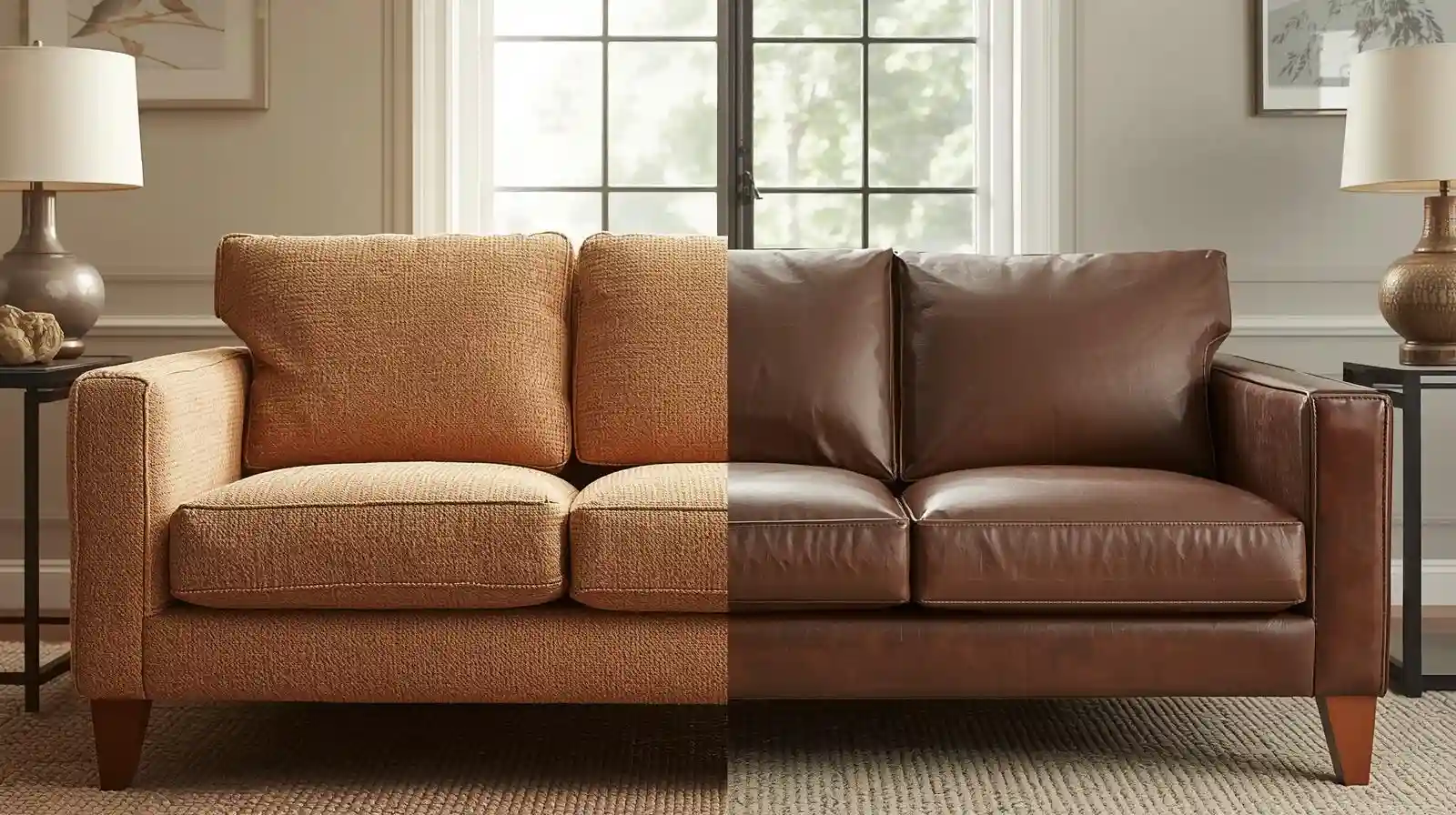
Fabric vs Leather Sofa: Which is Best for Dubai Weather
For Dubai’s hot, humid climate, fabric sofas outperform leather sofas in comfort, durability, and value. Leather heats up within 30-45 minutes of AC shutdown, feels sticky in humidity above 60% RH, and degrades 30-50% faster in the UAE than in temperate climates. Microfiber, solution-dyed acrylic, and performance velvet stay cooler, resist moisture, handle UV radiation, and last 7-12 years with standard maintenance. Dubai residents should choose performance fabric sofas with UV-stable, moisture-resistant upholstery for the best long-term comfort and value.
Why Dubai’s Climate Changes Everything About Sofa Selection?
Most sofa guides are written for temperate climates, Europe, North America, or the UK. Dubai is a completely different story. Three climate forces work against your sofa simultaneously, and understanding them determines which material will last and which will fail.
Heat: Extreme and Sustained
Dubai’s summer temperatures routinely hit 43–48°C between June and September. Interior surfaces absorb and retain this heat. Leather, as an organic material with low breathability, absorbs heat rapidly and releases it slowly making a leather sofa feel uncomfortably hot within 30–45 minutes of AC shutdown.
Fabric, particularly open-weave or microfiber constructions, allows air to circulate freely. Fabric surface temperatures in the same room typically run 6–10°C lower than leather surfaces.
Humidity: The Silent Destroyer
Dubai’s relative humidity peaks between 80-95% during July and August. Indoor AC creates rapid temperature swings: rooms can drop from 40°C outside to 20°C inside within seconds. This heat-cold cycling is the primary reason leather sofas deteriorate faster in the UAE than anywhere else.
Leather is an organic material. It swells with moisture absorption, then contracts during AC cooling, creating micro-cracks along seams and armrests. High humidity also accelerates the breakdown of bonded and top-grain leather. Performance fabrics (polyester-based, microfiber, solution-dyed acrylic) do not swell or contract with humidity changes and are inherently moisture-resistant.
UV Radiation: Intense and Year-Round
Dubai receives over 3,500 hours of sunshine annually, one of the highest rates in the world. Direct UV exposure through windows bleaches fabric and dries out leather at an accelerated rate. East- and west-facing rooms are the most affected, typically exposing sofas to 4-6 hours of direct sun per day.
UV damage to leather begins showing within 12-18 months without active protection. UV-stable performance fabrics resist fading for 5-7 years under the same conditions.
Best Fabric Types for Dubai’s Climate
Not all fabric performs equally in Dubai. The material composition determines how the sofa handles heat, humidity, dust, and daily wear. Here’s what actually holds up, and what doesn’t.
Fabrics That Work
- Microfiber (Polyester-based): The top performer for Dubai homes. Repels moisture, resists dust mites, and cleans easily with a damp cloth. Maintains color under UV exposure for 5-7 years without significant fading. Martindale abrasion rating: 50,000+ rubs for quality grades.
- Performance Velvet (Acrylic or Polyester): Luxurious look with practical durability. Resists humidity and does not trap heat the way natural velvet does. Look for a Martindale abrasion rating above 25,000 rubs.
- Solution-Dyed Acrylic (e.g., Sunbrella): The gold standard for UV resistance in Dubai. Color is embedded in the fiber so it does not fade. Originally designed for marine environments; offers Class 7-8 UV fastness (highest available). Excellent for rooms with direct sun exposure.
- Linen-Polyester Blends (60/40): Breathable and natural-looking without the moisture absorption issues of pure linen. Best for bedrooms and lower-traffic living rooms.
Fabrics to Avoid in Dubai
- 100% Natural Cotton: Absorbs moisture in humid conditions. Develops mold in poorly ventilated rooms within 3–6 months.
- Natural Silk: Degrades rapidly under cold-dry AC cycling and direct sunlight. Not suitable for Dubai’s climate.
- Chenille: Traps fine desert dust deeply in its loops. Requires professional cleaning every 3 months, expensive and impractical for daily-use sofas.
- Untreated Linen: Wrinkles, absorbs humidity, and becomes stiff with repeated wet-dry cycles from AC usage.
Fabric vs Leather Sofa: A Quick Comparison
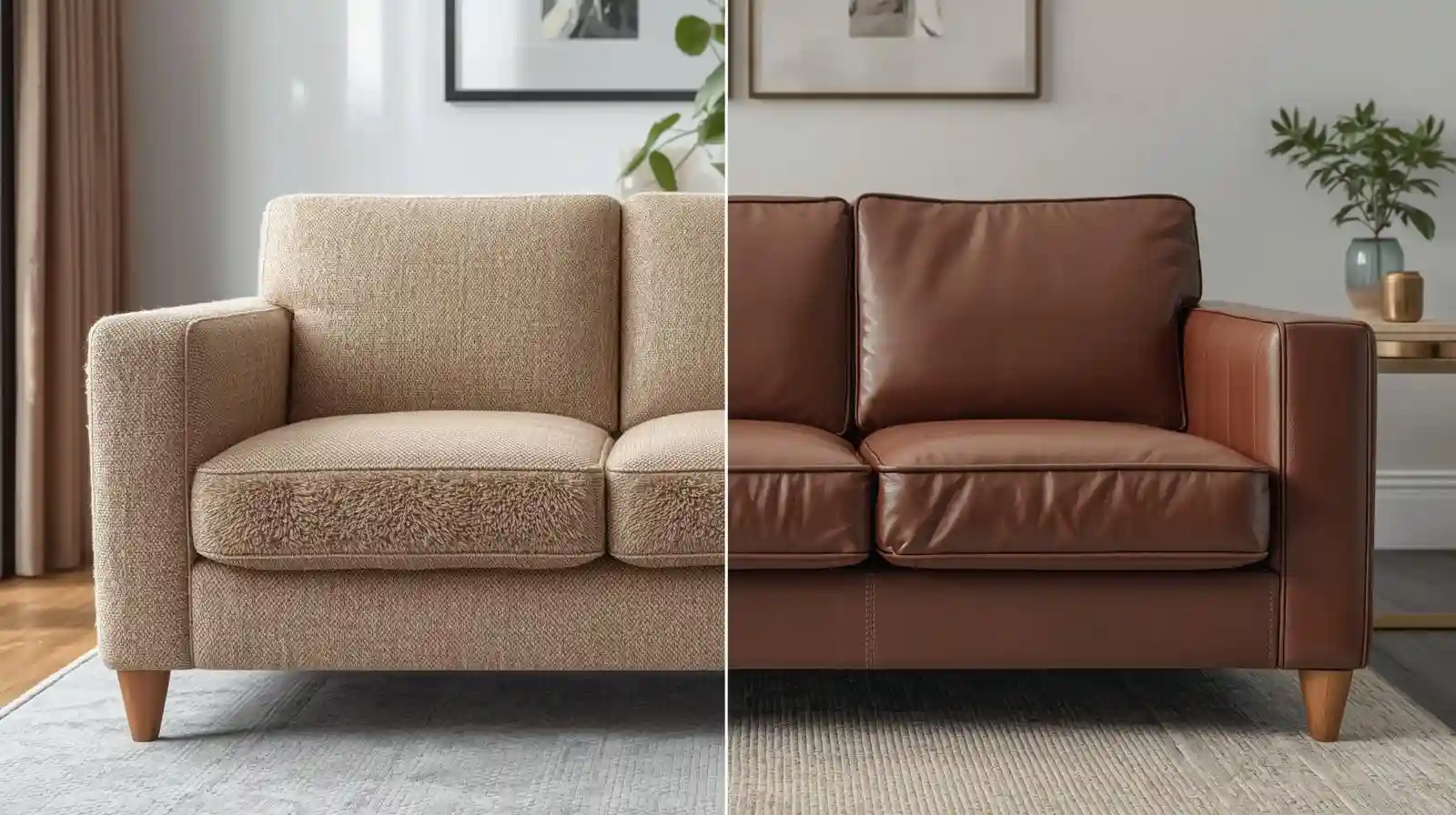
Here is the head to head comparison between these two sofas.
| Factor | Fabric Sofa | Leather Sofa |
| Heat Comfort | Stays 6–10°C cooler; breathes naturally | Heats up within 30–45 min; feels sticky in humidity |
| Humidity Resistance | High performance fabrics are moisture-resistant | Low organic material swells, cracks, peels |
| UV Resistance | 5–7 years (solution-dyed acrylic); fades after 500+ hrs (untreated) | 12–18 months without active UV protection |
| Dust Resistance | High tightly woven microfiber repels surface dust | Medium seams and tufting trap fine desert dust |
| Maintenance Cycle | Vacuum weekly; steam clean every 6 months | Condition every 6–8 weeks; monthly wipe-down |
| Avg. Lifespan Dubai | 7–12 years (quality fabric) | 18–30 months (bonded) / 7–10 years (full-grain) |
| Cost Range (AED) | 1,500 – 12,000+ | 3,000 – 20,000+ for genuine quality |
| Child & Pet Friendly | Easy spot-cleaning; highly stain-resistant | Scratches easily; pet damage difficult to repair |
| Climate Sensitivity | Low, stable performance year-round | High, expands in heat, cracks in cold-dry AC |
| Ideal Room Type | All Dubai property types | Climate-controlled commercial / high-budget homes only |
| Ideal For | Villas, apartments, offices, commercial spaces | Hotel lobbies, executive offices with daily maintenance |
Step-by-Step Sofa Buying Guide for Dubai Homes
Follow these six steps before purchasing any sofa in Dubai. They apply whether you’re furnishing a studio apartment or a six-bedroom villa.
- Assess your room’s sun exposure. Rooms with east- or west-facing windows receive 4–6 hours of direct sun daily. These rooms require UV-resistant fabric sofas or UV window film before any sofa purchase.
- Evaluate your AC consistency. Rooms where AC runs 24/7 at a stable 20–22°C tolerate leather better than rooms with fluctuating temperatures. If you switch AC off when leaving home, choose fabric.
- Set your realistic budget. Quality fabric sofas start at AED 2,500. Quality genuine leather starts at AED 10,000. Anything below these thresholds in either category will likely fail within 3 years in Dubai conditions.
- Check the fabric technical rating. Look for upholstery labeled FR-rated (flame resistant), UV-stable, and with a Martindale rating above 20,000 rubs for daily-use sofas. For high-traffic rooms, request 50,000+ rubs.
- Request fabric swatches before ordering. Hold the swatch near an AC vent for 30 minutes. If it stiffens, the weave is too tight for cold-dry cycling. If it stays supple, it will perform well in Dubai’s climate.
- Confirm the frame and filling materials. Look for kiln-dried hardwood frames (resists warping in humidity) and high-density foam with a density of 35 kg/m³ or above. Cheaper foam collapses within 2-3 years in Dubai’s heat.
How to Extend Any Sofa’s Lifespan in Dubai
These five practical steps extend your sofa’s lifespan by 3-5 years regardless of material, and most cost far less than a premature sofa replacement.
- Install UV-filtering window film: 3M Thinsulate or LLumar UV films reduce UV transmission by up to 99%. They protect both fabric and leather and cost AED 30–60 per square foot, a fraction of the cost of replacing a quality sofa.
- Maintain consistent AC temperature: Keep AC set between 20-24°C year-round. Temperature cycling, the repeated shift between extreme outdoor heat and cold indoor AC is the single biggest cause of both leather cracking and fabric degradation in Dubai. Stability extends material life dramatically.
- Rotate sofa cushions every 2 weeks: This distributes wear and UV exposure evenly across the entire surface, preventing the sun-bleached patch problem common in Dubai living rooms near east- or west-facing windows.
- Keep sofas at least 2 meters from windows: This simple positioning rule reduces direct UV exposure by 60-70% and significantly lowers surface temperatures, particularly for leather sofas.
- Schedule professional deep cleaning every 6 months: Dubai’s dust levels are significantly higher than temperate climates. Fine particulate matter embeds in upholstery fibers and causes premature surface wear if not removed by professional steam extraction.
In Conclusion
Whether you live in a villa in Arabian Ranches, an apartment in Downtown, or manage a commercial building in Business Bay, a high-quality performance fabric sofa is the right choice. It stays cooler, lasts longer, costs less to maintain, and handles the heat, humidity, and dust of UAE living better than leather in almost every real-world scenario.
When you’re ready to invest in a sofa built for how people actually live in Dubai, explore the custom sofa Dubai option at RAM Furniture. RAM Furniture designs bespoke sofas specifically for your needs and space. Our experts understand both the aesthetic demands of Dubai interiors and the practical durability requirements of UAE living. Whether you’re furnishing a single studio or an entire villa compound, RAM Furniture builds sofas that genuinely last.
Frequently Asked Questions
Q: Which sofa material is best for Dubai’s hot and humid weather?
Microfiber or solution-dyed acrylic are the best sofa material for Dubai’s hot and humid weather. These fabrics stay 6-10°C cooler than leather surfaces, resist moisture absorption, and maintain their appearance for 7-12 years without intensive maintenance. For homeowners who want the aesthetic of leather without the performance drawbacks, high-quality faux suede microfiber offers a comparable look with superior durability in the UAE climate.
Q: Does leather sofa crack in Dubai?
Most leather sofas crack in Dubai within 2–5 years, depending on the leather grade. Bonded and PU leather crack within 18-30 months due to repeated expansion and contraction from heat and AC cycling combined with high humidity. Even genuine full-grain leather requires conditioning every 6-8 weeks to prevent cracking. Placement near windows without UV protection accelerates cracking significantly.
Q: How long does a fabric sofa last in Dubai?
A high-quality fabric sofa lasts 7-12 years in Dubai with standard care. Lower-quality fabrics with a Martindale abrasion rating below 15,000 rubs may deteriorate within 3-4 years under heavy use. Fabric sofas consistently outlast equivalent leather sofas in Dubai’s climate by 3–5 years.
Q: What fabric should I avoid for a sofa in Dubai?
Avoid 100% cotton, natural silk, untreated linen, and chenille for Dubai sofas. Cotton absorbs humidity and develops mold in poorly ventilated rooms within 3-6 months. Silk degrades under cold-dry AC cycling. Chenille traps fine desert dust deeply in its loops and requires professional cleaning every 3 months, far more frequently than performance fabrics.