

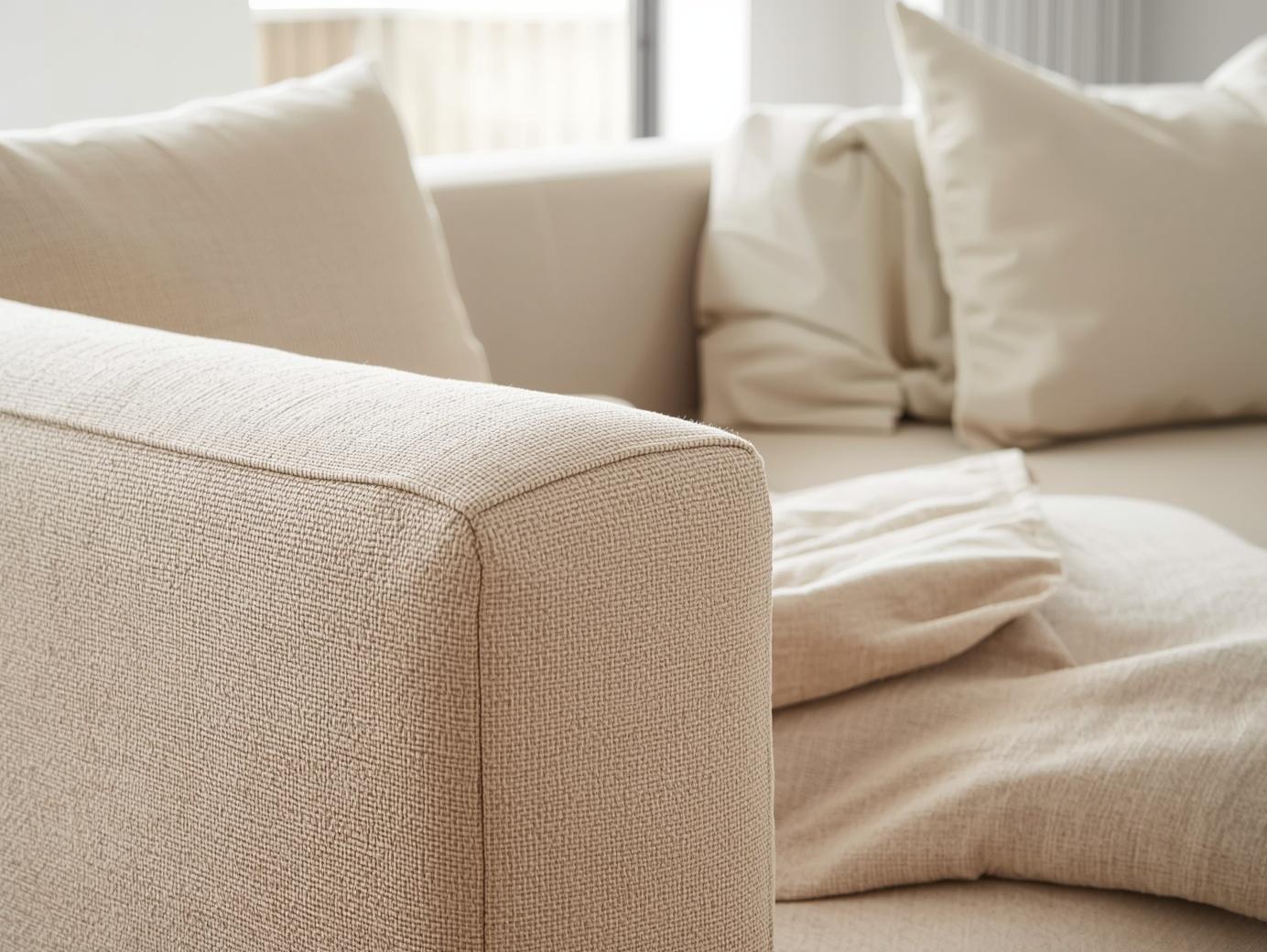
Best Sofa Material for Dubai Hot Climate
Picking a sofa seems straightforward, until you live somewhere where summers push past 45°C and air conditioning runs non-stop nine months of the year. In hot climates like Dubai, Abu Dhabi, Riyadh, or even tropical cities like Singapore or Miami, your sofa material becomes one of the most consequential decisions in your home setup. The wrong fabric will have you peeling off a leather cushion mid-afternoon or watching your velvet bleach out from indirect sunlight within a single season.
Based on our experience working with homeowners, villa developers, and interior fit-out teams across the UAE, we’ve identified which materials genuinely hold up and which ones look beautiful in the showroom but disappoint within a year of real Gulf living. This guide gives you everything you need to make the right call.
Why Does Sofa Material Matter More in Hot Climates?
In temperate countries, sofa fabric is mostly a style decision. In hot climates, it becomes a comfort and longevity decision. Here is what you are actually dealing with:
- Heat retention: Dense, non-breathable materials trap body heat and make sitting uncomfortable within minutes.
- Humidity interaction: Coastal Gulf cities like Dubai have periods of high humidity. Some fabrics absorb moisture and hold odors or grow mildew.
- UV degradation: Even with tinted glass, indirect sunlight in these regions is intense. Fabrics fade, crack, or weaken faster than they would elsewhere.
- Dust accumulation: Sandstorms and fine desert dust penetrate homes constantly, making fabric porosity and ease of cleaning critical factors.
- AC cycling: Rapid temperature swings between a cool interior and hot outdoor air stress materials differently than in consistently temperate climates.
The Best Sofa Materials for Hot Weather
1. Linen
Linen is arguably the best natural fabric for hot climates. It is highly breathable, moisture-wicking, and grows softer with each wash. The open weave structure allows air to circulate rather than trapping body heat against your skin. In practice, we have found that clients who switch from polyester blends to linen report an immediate improvement in comfort during the warmer months.
Linen wrinkles easily and requires more upkeep. Opt for a linen blend (typically 55% linen / 45% cotton or polyester) if you want the breathability without the high-maintenance creasing.
Pro tipChoose linen in light sand, off-white, or stone tones. Light colors reflect radiant heat rather than absorbing it, keeping the surface temperature noticeably cooler to the touch especially near windows.
2. Cotton
Cotton is the workhorse of sofa fabrics in warm climates. It breathes well, does not cling to skin, and is widely available in tight-weave options that resist dust penetration. Cotton canvas or duck cotton in particular offers impressive durability at a mid-range price point. When working with hospitality clients furnishing beachfront properties in Jumeirah, cotton slipcover sofas proved to be the most practical choice for high-traffic areas with frequent cleaning needs.
Untreated cotton is susceptible to fading under UV exposure. Look for solution-dyed cotton or pre-treated varieties with UV inhibitors.
3. Performance fabric (the smart choice)
Performance fabrics are engineered textiles designed specifically to outperform natural fibers in challenging conditions. They offer:
- Stain resistance (most repel liquids entirely)
- UV stability tested to 500+ hours of direct exposure without fading
- Mold and mildew resistance, critical in coastal humid environments
- Breathability comparable to woven cottons
- Easy spot-cleaning with mild soap and water
In our experience, performance fabric is the single best recommendation for families with children, villa owners with large sun-facing living rooms, and commercial spaces in the UAE. The upfront cost is 20–40% higher than standard upholstery fabric, but the lifecycle cost is significantly lower.
Pro tipSunbrella’s indoor/outdoor performance fabric line is tested to 2,000+ hours of UV exposure (AATCC 16 standard). If your sofa sits near a glass wall or receives filtered sunlight through curtains, Sunbrella is worth the premium.
4. Microfiber (with caveats)
High-quality microfiber with an open weave structure performs reasonably well in moderate heat. It is soft, durable, and easy to clean. However, cheaper microfiber is essentially plastic it generates heat quickly and feels sticky in high-humidity conditions. If you choose microfiber, verify that it has a moisture-wicking or ventilated construction rather than a dense pile finish.
5. Outdoor-rated fabric for semi-outdoor spaces
If your sofa is in a shaded outdoor seating area, a covered veranda, or a room that opens directly to the outside, outdoor-rated upholstery fabric is the right call. These are purpose-built for heat, UV, and moisture and will outlast any indoor upholstery fabric placed in the same environment by several years.
Which Material to Avoid in Hot Climates?
1. Leather and faux leather
Leather has a devoted following and it is easy to understand why it looks luxurious and wipes clean in seconds. But in a hot climate, leather becomes genuinely uncomfortable. It conducts heat, meaning it reaches ambient room temperature and stays there. In a room that has been shut all day and warms up, sitting on a leather sofa is genuinely unpleasant. More critically, the combination of UV exposure and the dry-humid cycling of air conditioning causes leather to crack, fade, and peel within two to three years if not diligently conditioned, a task many owners skip.
2. Velvet
Velvet traps heat like few other materials. The dense pile creates an insulating layer that holds warmth against the body. It also attracts and holds fine dust, which is a significant issue in desert climates. In our experience, velvet sofas in Dubai apartments consistently show signs of fiber degradation and fading within 18 months of placement near windows, even with indirect light.
3. Cheap synthetic blends
Low-cost polyester or nylon upholstery may seem like a budget-friendly solution, but dense synthetic weaves breathe poorly and generate static in dry environments. They also tend to pill and degrade quickly under UV. This is different from performance fabrics quality engineered synthetics are excellent; cheap commodity synthetics are not.
Expert Tips for Maintaining Your Sofa in Hot Climates
- Rotate cushions every 4–6 weeks to ensure even UV exposure and wear across all surfaces.
- Use UV-filtering window film on glass panels that face the sofa directly, this extends the life of any fabric by 30–50%, according to the International Window Film Association.
- Vacuum upholstery weekly with a soft brush attachment to prevent fine desert dust from embedding into the weave, which causes abrasion over time.
- Apply a fabric protector spray (Scotchgard or similar) to natural-fiber sofas every 6–12 months to improve stain resistance.
- Avoid placing sofas directly under AC vents, the constant direct airflow causes drying and can accelerate fabric degradation along the top surfaces.
- For leather sofas you already own, condition every 3 months with a product specifically formulated for your leather type (aniline, semi-aniline, or pigmented).
Conclusion:
Your sofa material decision is ultimately a trade-off between comfort, durability, aesthetics, and budget. In hot climates like Dubai, that trade-off plays out faster and more visibly than it does anywhere else. A poor material choice you might get five comfortable years from in London could show significant wear within two years in a Gulf villa.
If you are planning a sofa reupholstery, or new custom made sofa in Dubai, Sharjah, Ajman, simply contact us. Our experts will evaluate your room’s specific sun exposure, air conditioning setup, and cleaning routine before committing. The right material will serve you well for a decade. The wrong one will cost you far more in replacements than you saved at purchase.
Have questions about specific fabrics or need advice on a particular room setup? Reach out, we are happy to help you find the right fit.